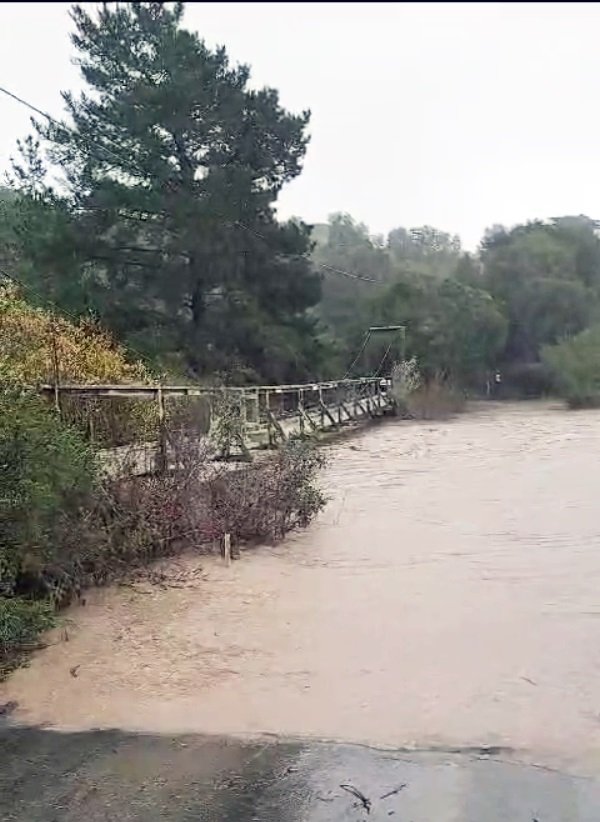
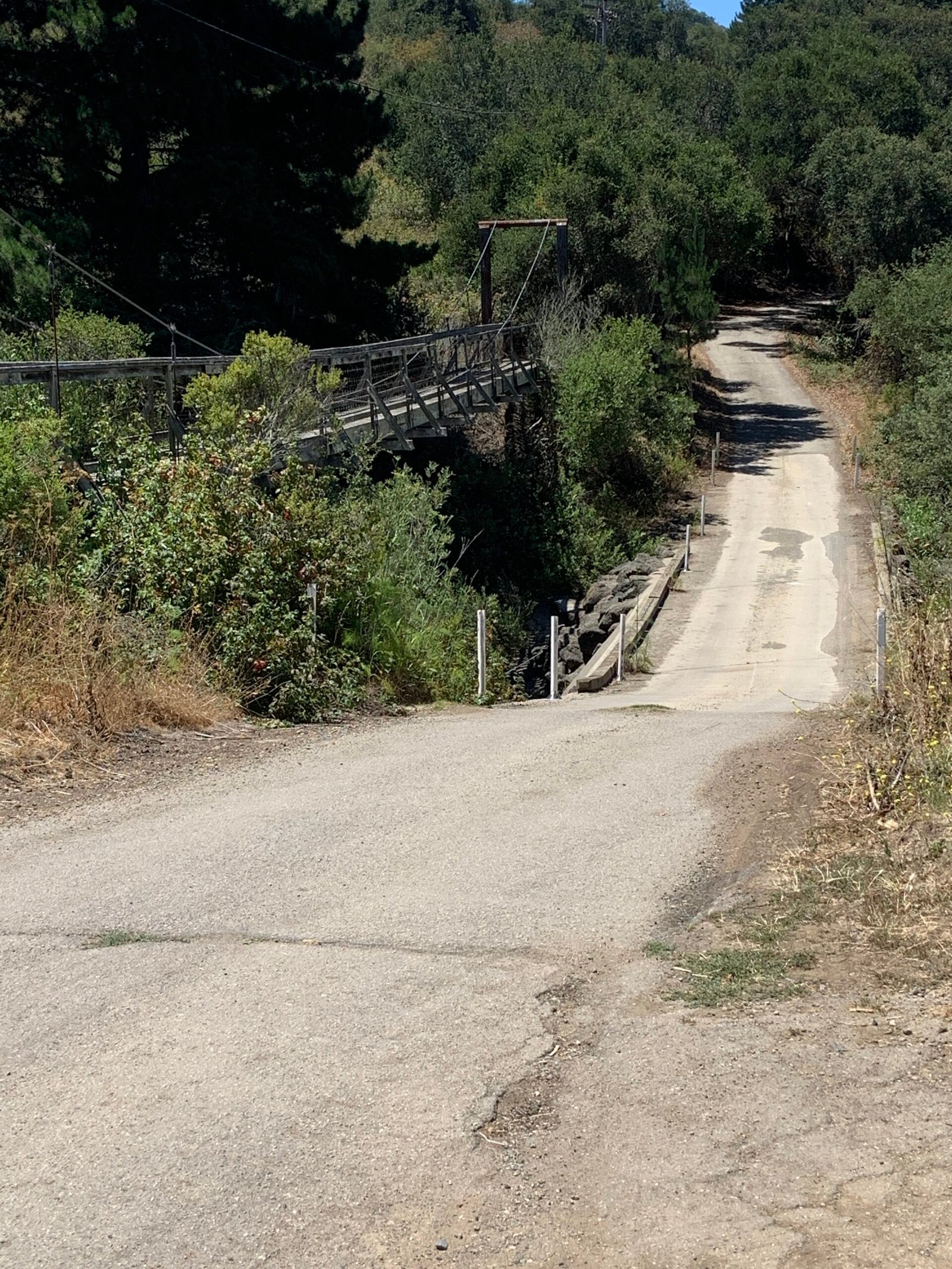
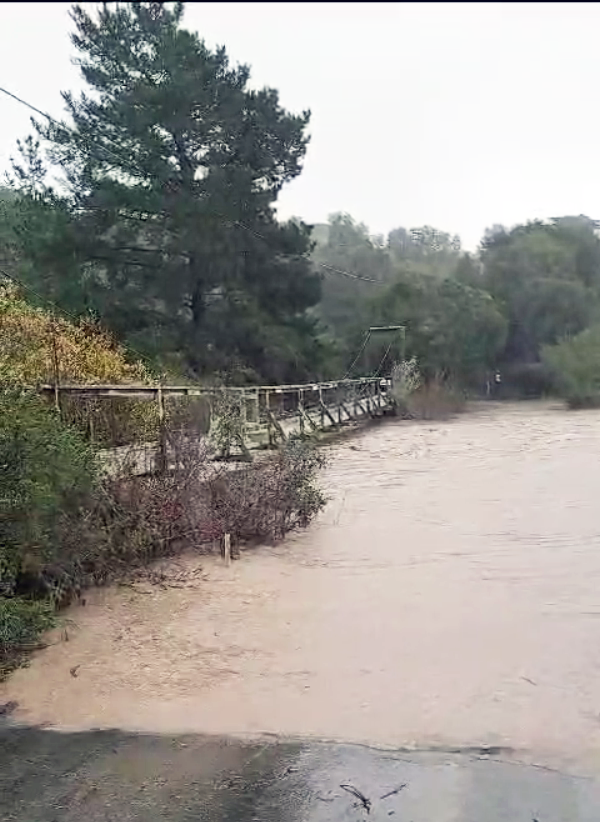
As you move the slider left and right you can clearly see the problem first hand.
On the left, a view of both the walk bridge and vehicular bridge on a typical summer’s day. On the right, the same perspective after a storm passes through. The two photos show a dramatic comparison of how the vehicular bridge becomes completely submerged fifteen (15) feet below the water level, leaving only the walk bridge as a way to get to the other side.
The poorly designed vehicular bridge was not built high enough causing frequent flooding during the rainy season. This forces people to park their cars and walk across the creek using the walk bridge. Unfortunately, the walk bridge has suffered from many years of wanton neglect. It badly needs a full renovation to make it safe once again.
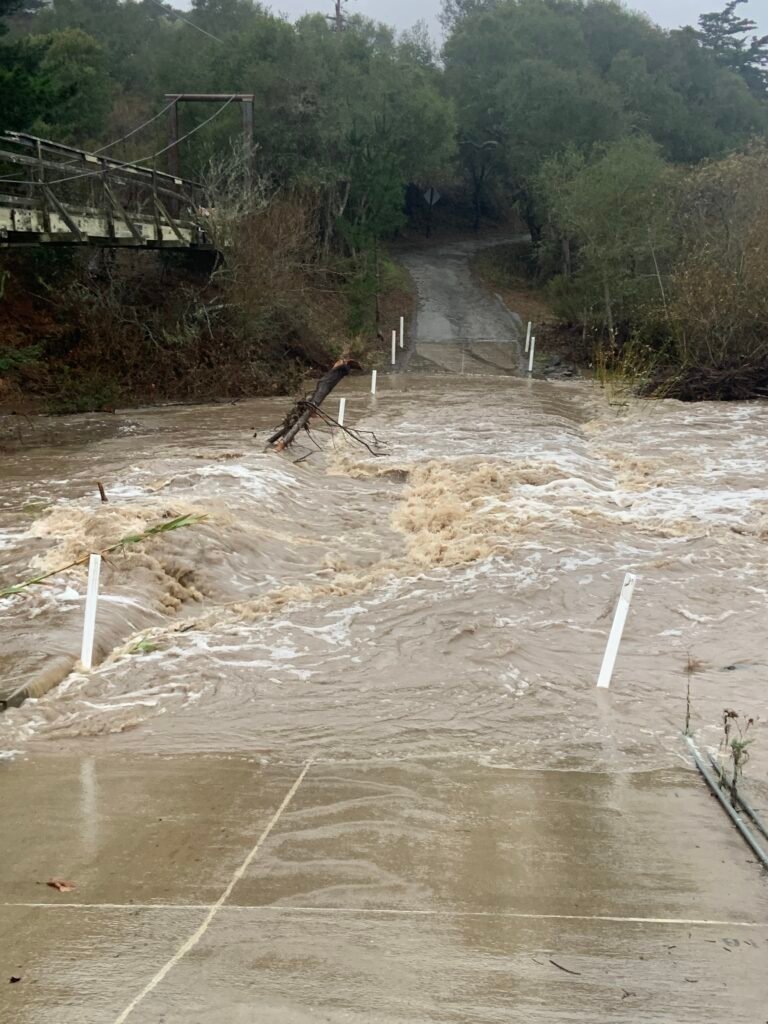
Viewing the photo below on can see that as the creek begins to dramatically rise, all sorts of debris floats downstream until it gets hung-up on the vehicular bridge. Eventually the creek swells up to form a rapids over the vehicular bridge before completely consuming the vehicular bridge entirely.
If one foolishly attempted to drive over the bridge with the swift moving water, the car would be swept off the bridge and occupants of the vehicle could very will lose their lives. Billions of gallons of swiftly moving water is very dangerous indeed.
The photo below shows what it’s like when the water rises up to nearly 15 feet over the vehicular bridge, rising to just under the walk bridge. Anyone who would fall through the walk-bridge because of rotted planks would be swept away and probably drown.
This is close to the high-water mark for this particular storm. It’s not known if the water has ever inundated the walk-bridge or not. If it ever does, then some of the homes and farms in the local area will be threatened as well. In this photo, the waterline is roughly a foot below the walk-bridge and moving swiftly towards the ocean.